


Interpretive Panels
Downloadable signage that supports exhibitions and deepens visitors' understanding of why NASA studies Earth.
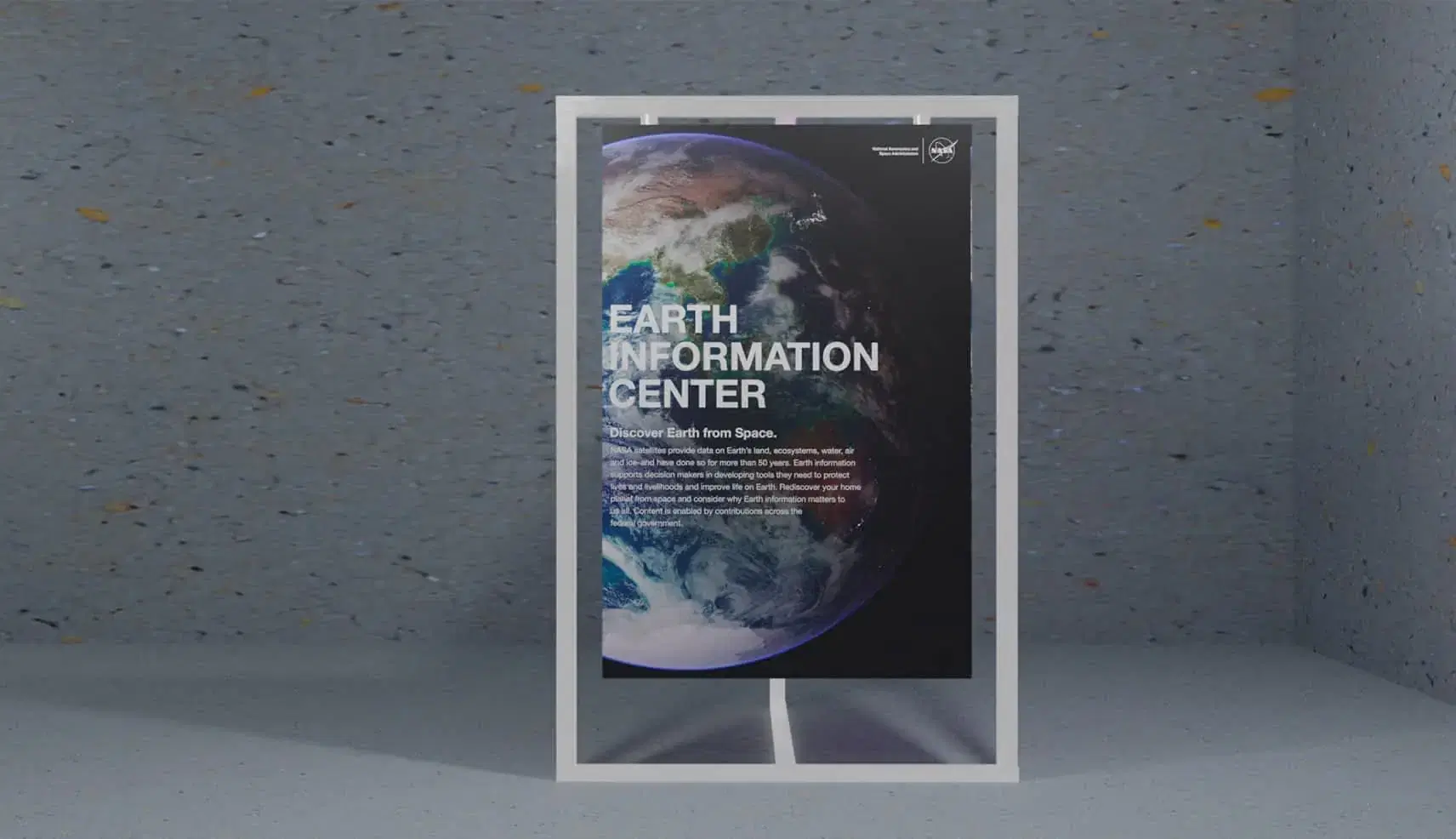
Discover Earth as NASA Sees It
NASA satellites provide data on Earth's land, ecosystems, water, air and ice–and have done so for more than 50 years. Earth information supports decision makers in developing tools they need to protect lives and livelihoods and improve life on Earth. Step inside and rediscover our home planet from space and consider why Earth information matters to us all.
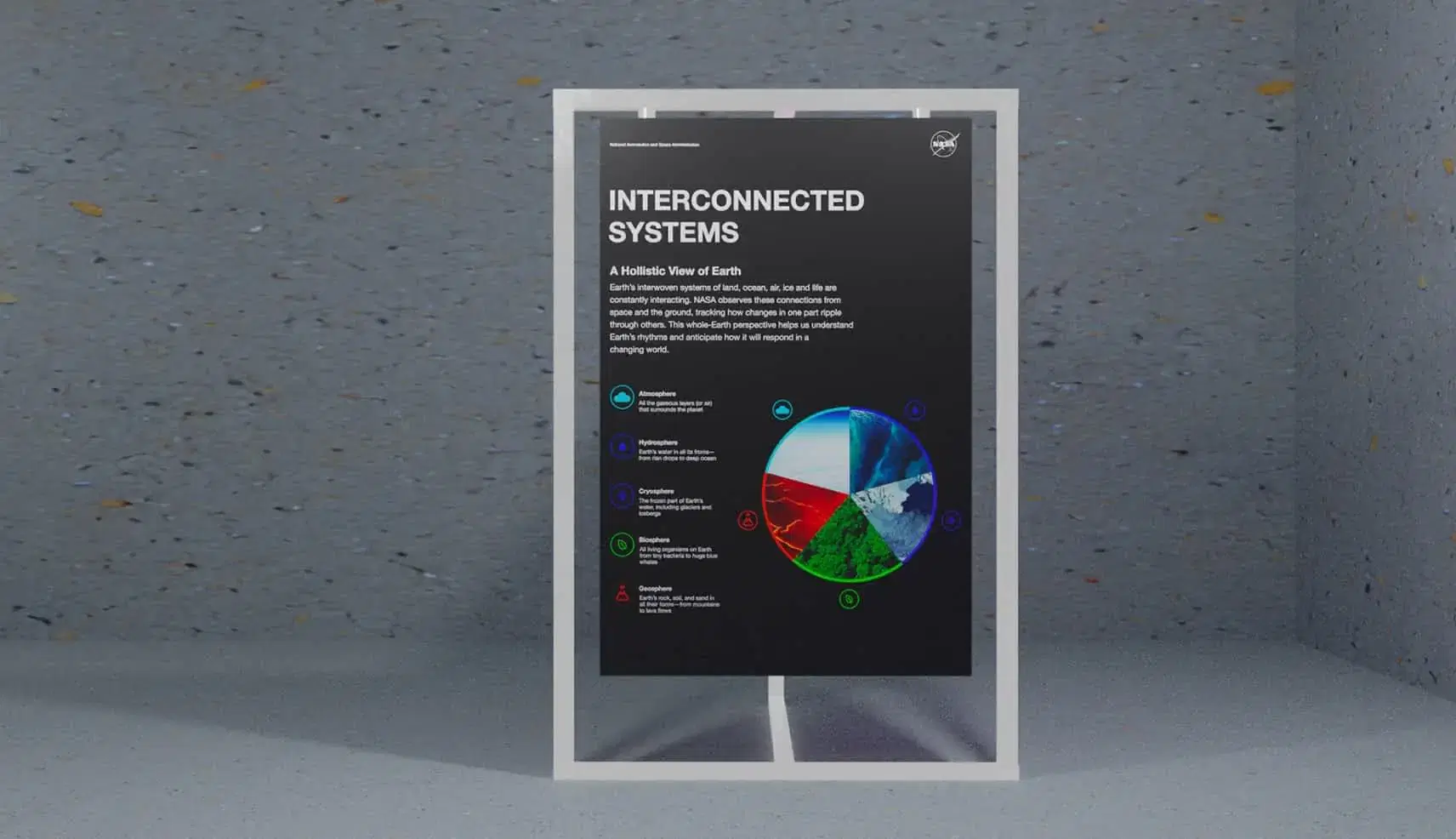
A Holistic View of Earth
Earth's interwoven systems of land, ocean, air, ice, and life are constantly interacting. NASA observes these connections from space and the ground, tracking how changes in one part ripple through the others. This whole-Earth perspective helps us understand Earth's rhythms and anticipate how it will respond in a changing world.
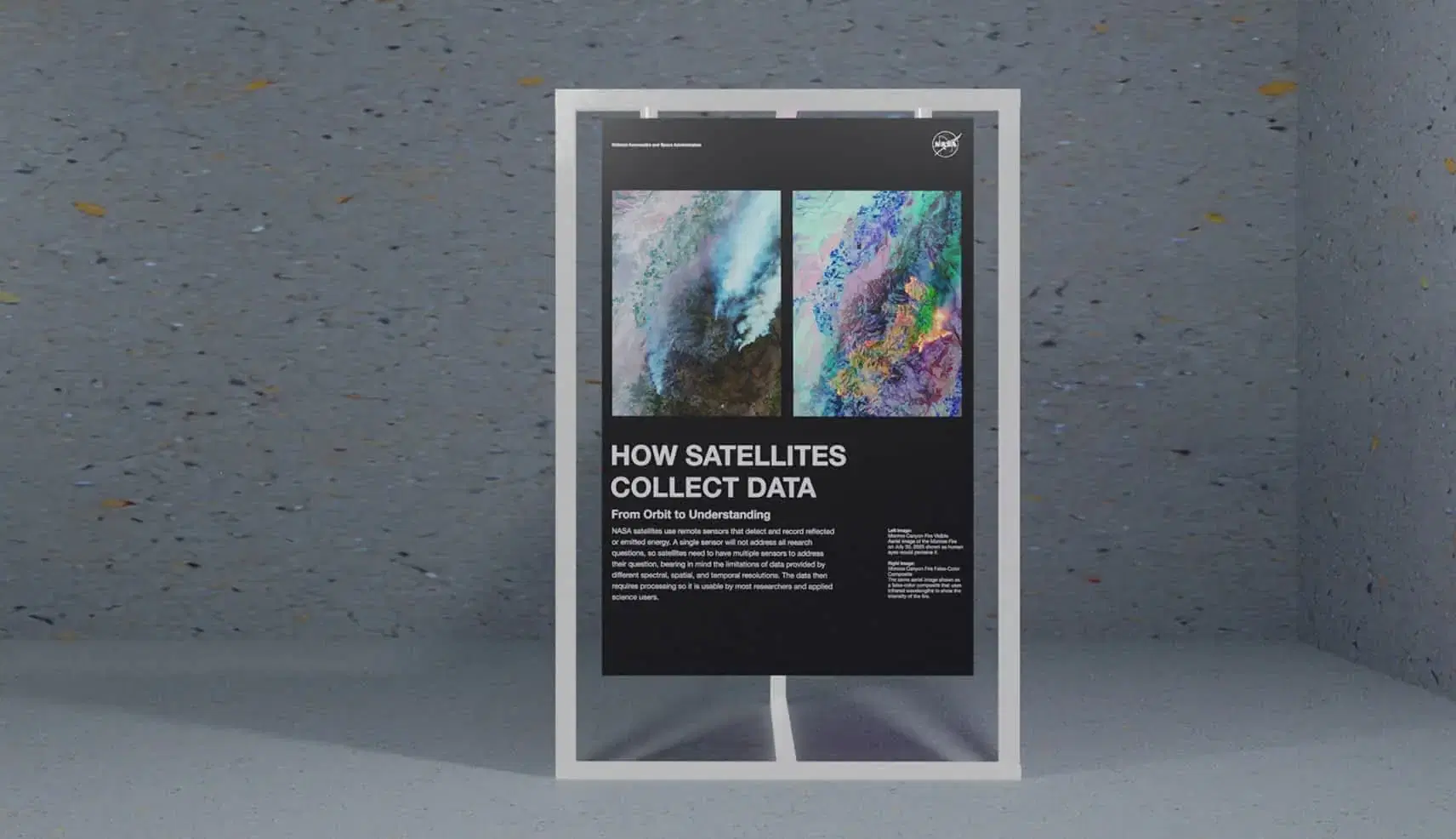
From Orbit to Understanding
NASA's satellites use remote sensors that detect and record reflected or emitted energy. A single sensor will not address all research questions, so satellites need to have multiple sensors to address their question, bearing in mind the limitations of data provided by different spectral, spatial, and temporal resolutions. The data then requires processing so it is usable by most researchers and applied science users.
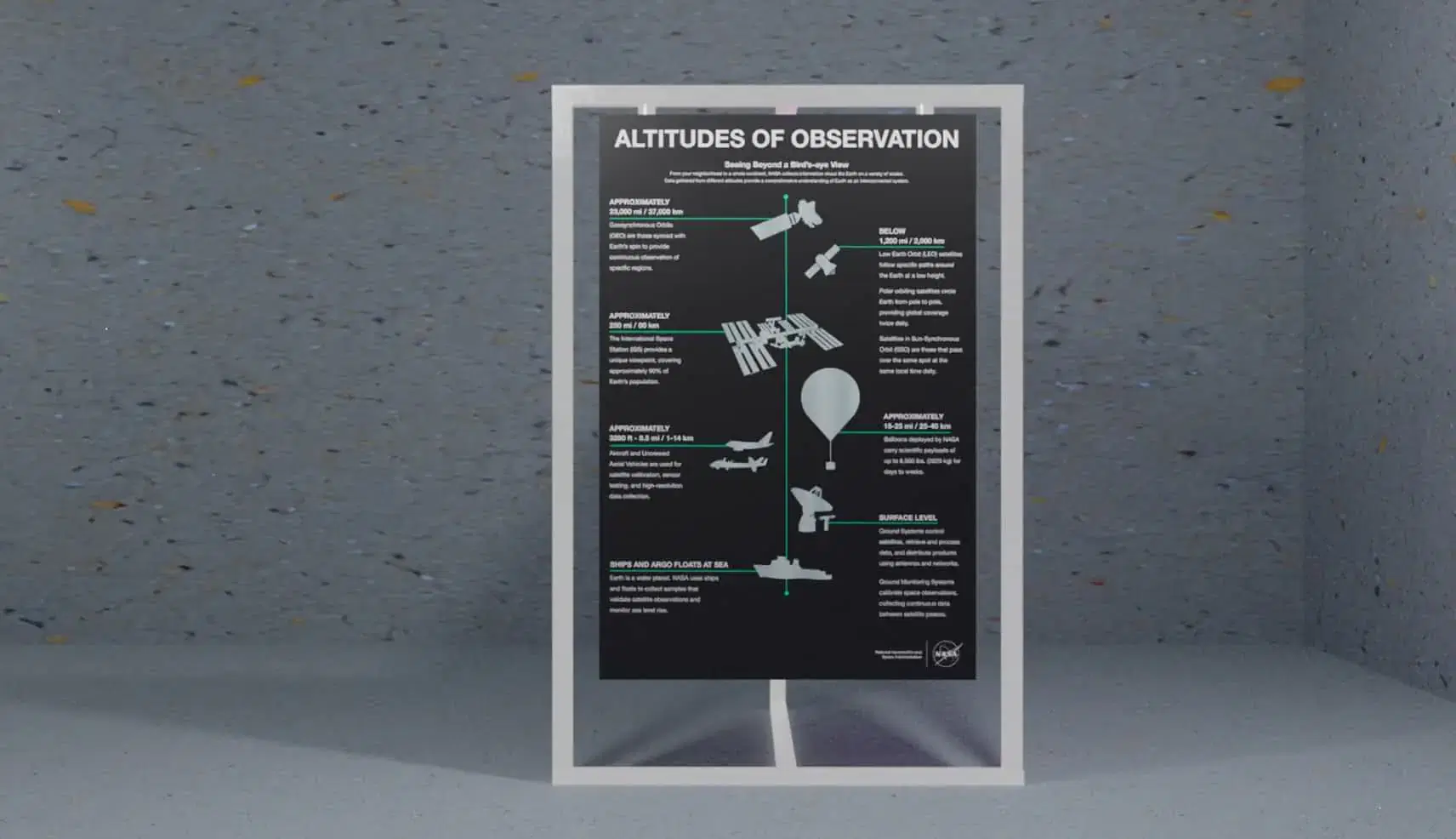
Seeing Beyond a Bird's-eye View
From your neighborhood to a whole continent, NASA collects information about the Earth on a variety of scales. Data gathered from different altitudes provide a comprehensive understanding of Earth as an interconnected system.
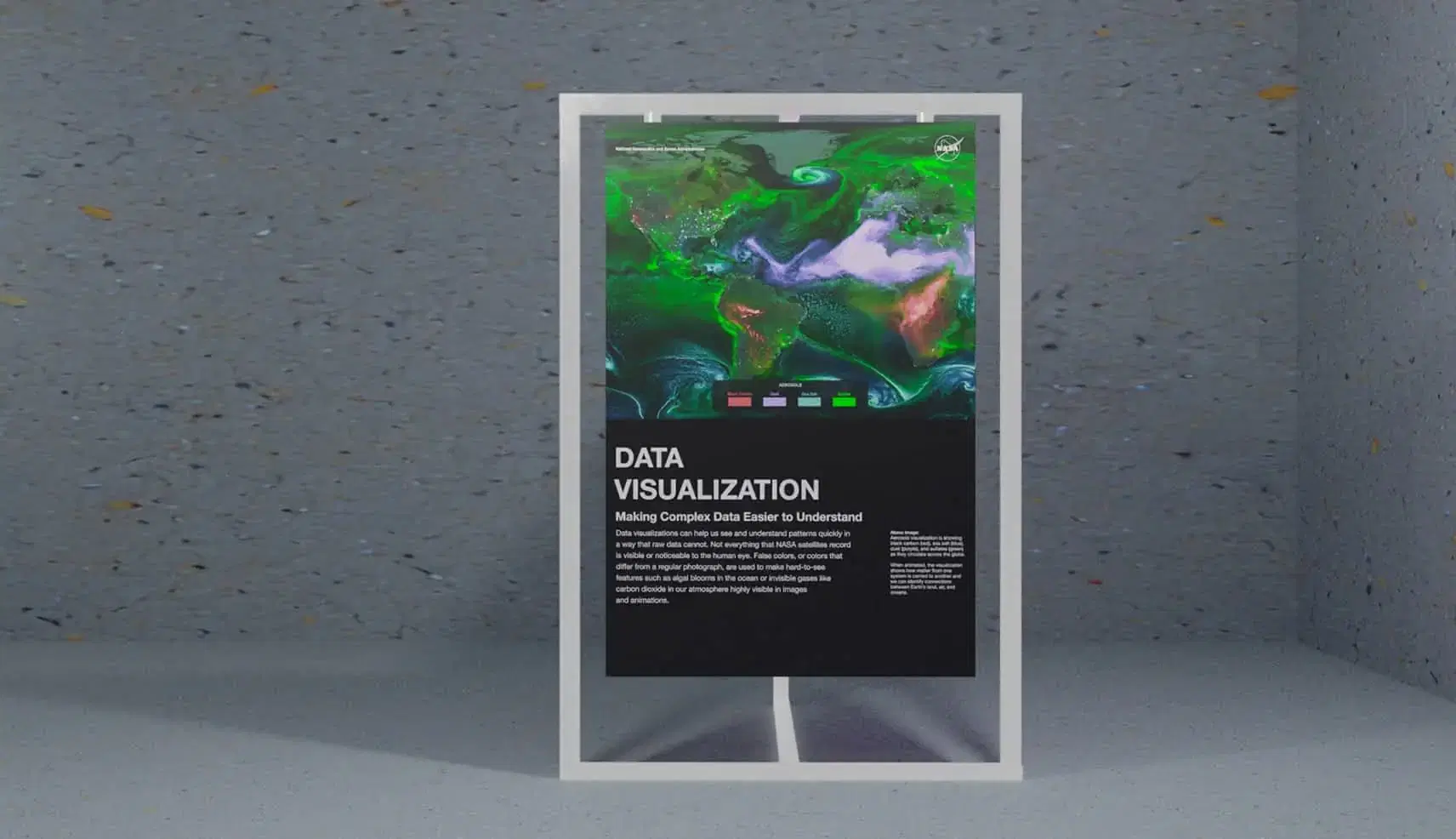
Making Complex Data Easier to Understand
Data visualizations can help us see and understand patterns quickly in a way that raw data cannot. Not everything that NASA satellites record is visible or noticeable to the human eye. False colors, or colors that differ from a regular photograph, are used to make hard-to-see algal blooms in the ocean or invisible gasses, like carbon dioxide, in our atmosphere highly visible in images and animations.
MINIMUM INTERPRETIVE PANELS REQUIREMENTS
Available Formats
Sizes
- 8.5 in x 11in
- 11 in x 17 in
- 27 in x 40 in
- 36 in x 48 in
- 48 in x 72 in
Suggested Display Materials
- Paper Type
Text, cover, or synthetic paper depending on durability and application - Stock Weights
Stock weights ranging from 80-160 lb for rigidity and professional finish - Finish
Matte, satin, or gloss finishes to balance readability and visual impact - Protection
Optional UV coating or lamination for protection and longevity
NASA's Earth Information Center Interpretive Panels Package hosts a set of downloadable materials intended for the use of museums and other institutions to support its mission. Read the full Terms and Conditions here.