


Energy
Energy impacts everything we do, from heating and cooling homes and buildings, to providing development opportunities and improving quality of life. Learn how Earth data are used to better understand where energy resources exist and how they are impacted by physical environmental conditions.
INFO
Whether deciding the optimal location for solar panels or designing sustainable buildings, federal agencies are using modern techniques to inform daily decisions made by individuals and industry alike. Researchers use information from satellites and sensors in combination with ground-based gauges to learn about energy supply and demand across the globe. The results from this research can be used by households, towns, cities and states to make more informed decisions surrounding community planning and energy use.
NASA Mapping Critical Minerals
From the skies above the American West to the vantage point of the International Space Station, NASA scientists are using advanced imaging spectroscopy to uncover what lies hidden in plain sight: critical minerals essential to our daily lives. Lithium, cobalt, neodymium, and dozens of other critical minerals are essential components in our phones, computers, clean energy technologies, and national security technology. By capturing the unique "spectral fingerprints" of these minerals, researchers can map where they are located on Earth, helping ensure resources for the future while deepening our understanding of the planet. The Geological Earth Mapping Experiment (GEMx) is a joint effort between NASA and the U.S. Geological Survey (USGS) to advance our knowledge of critical mineral resources in the Western United States. In September 2023, NASA aircraft began supporting an effort to find and map critical mineral deposits in Western regions of the U.S. Identifying these minerals could help improve environmental processes for mining and geological activities, enhance national security, and boost the economy. This project will continue through Fall 2026.
Related Data Visualizations
Change in Night Lights between 2012 and 2023 - EIC Version
Discover the pivotal role of NASA's Black Marble in bridging scientific discovery and actionable environmental stewardship. By capturing Earth's night lights, Black Marble reveals both the planet's beauty and the profound impact of human activities. This webpage showcases newly developed nighttime light maps comparing changes observed from 2012 to 2023, offering a decade-long perspective on urban growth, infrastructure development, and the socioeconomic dynamics of communities worldwide. By illuminating the intricate interplay between human activity and the environment, Black Marble underpins a human-centered approach to environmental change, promoting a future where scientific innovation leads to tangible, positive impacts on global sustainability. This version is specifically formatted for the NASA Earth Information Center (EIC), which has a wider-than-standard video aspect ratio. The original version of this visualization, and many other night lights visualizations, are available here: https://svs.gsfc.nasa.gov/5276/ Visualizations by: Kel Elkins For more information or to download this public domain video, go to https://svs.gsfc.nasa.gov/531
ENERGY STORIES
 External Link
INTRODUCTION TO ENERGY
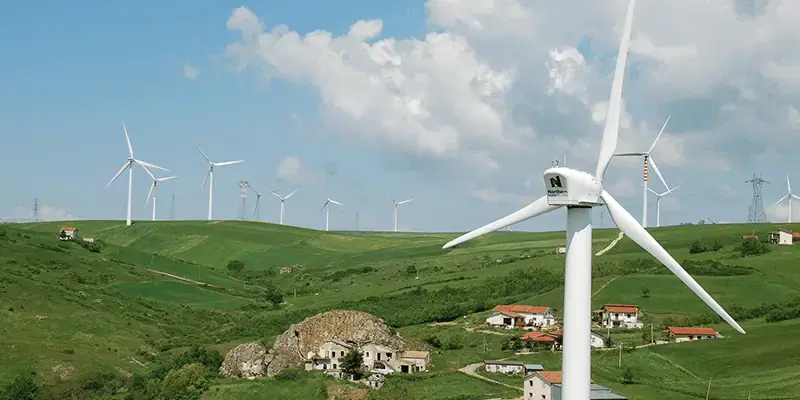
Energy impacts everything we do, from heating and cooling buildings, to running machinery, to improving the quality of life. Learn how Earth data are used to better understand where energy resources exist and how they are impacted by physical environmental conditions, weather and climate.