Smithsonian National Museum of Natural History
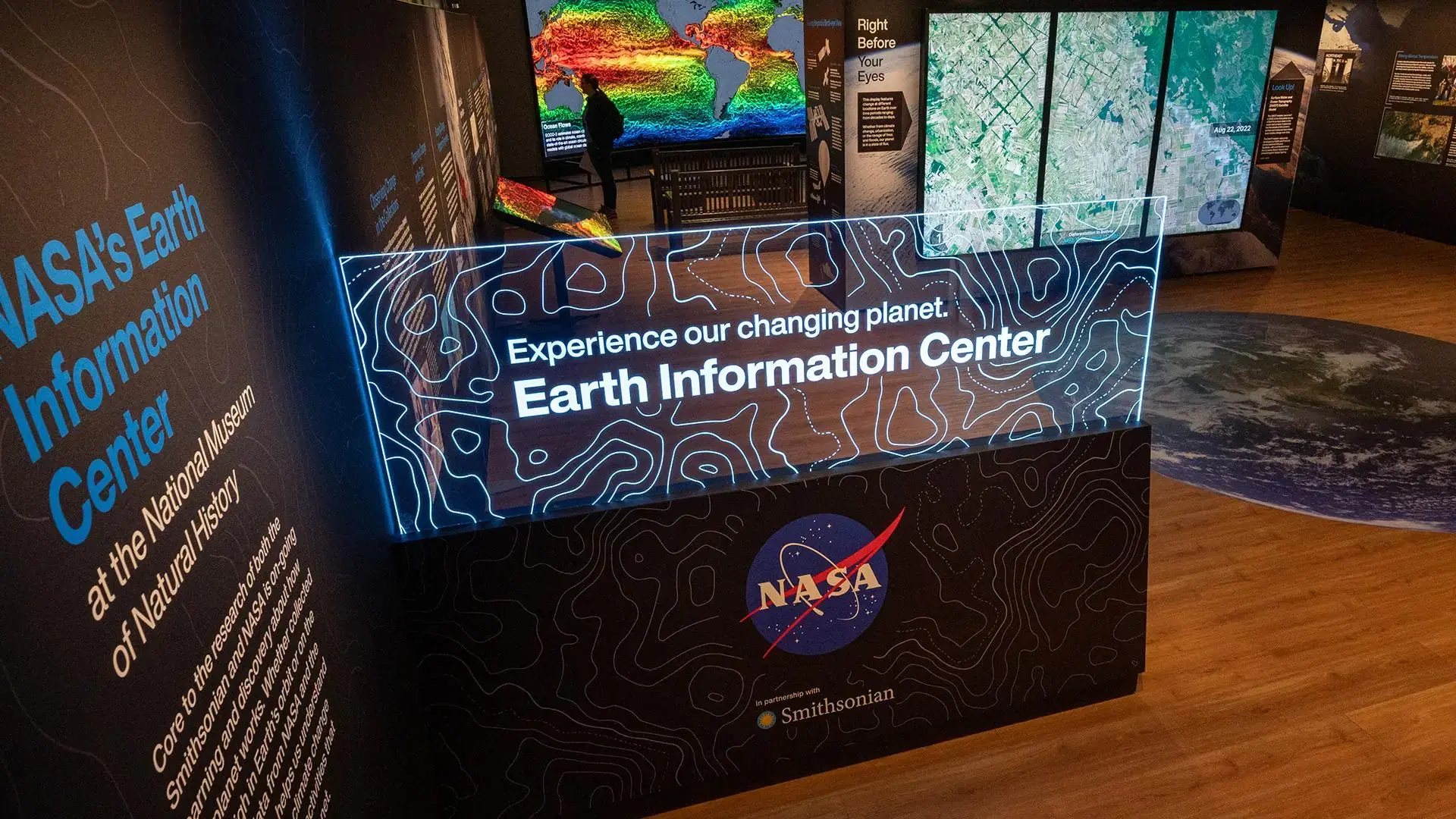
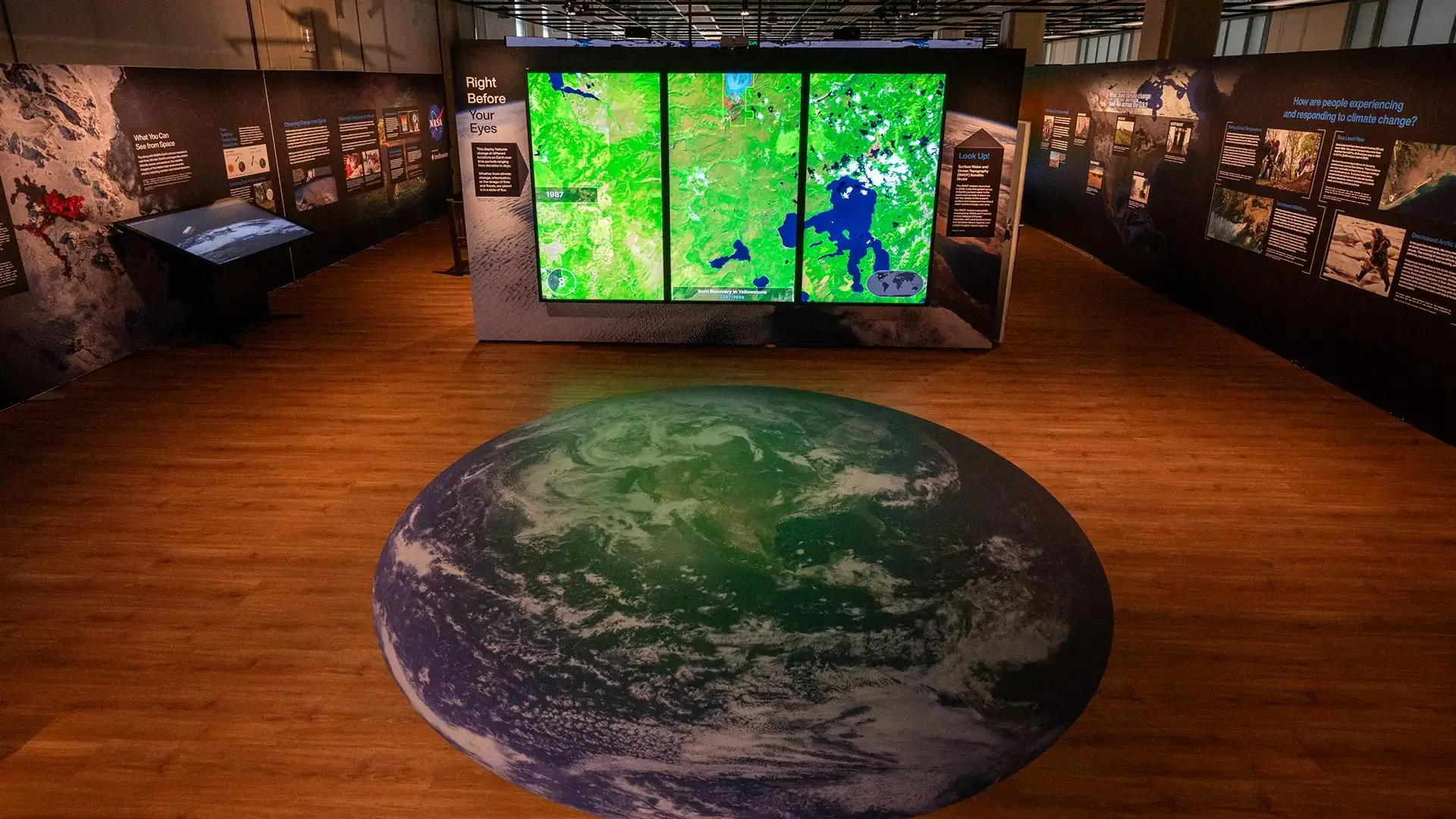
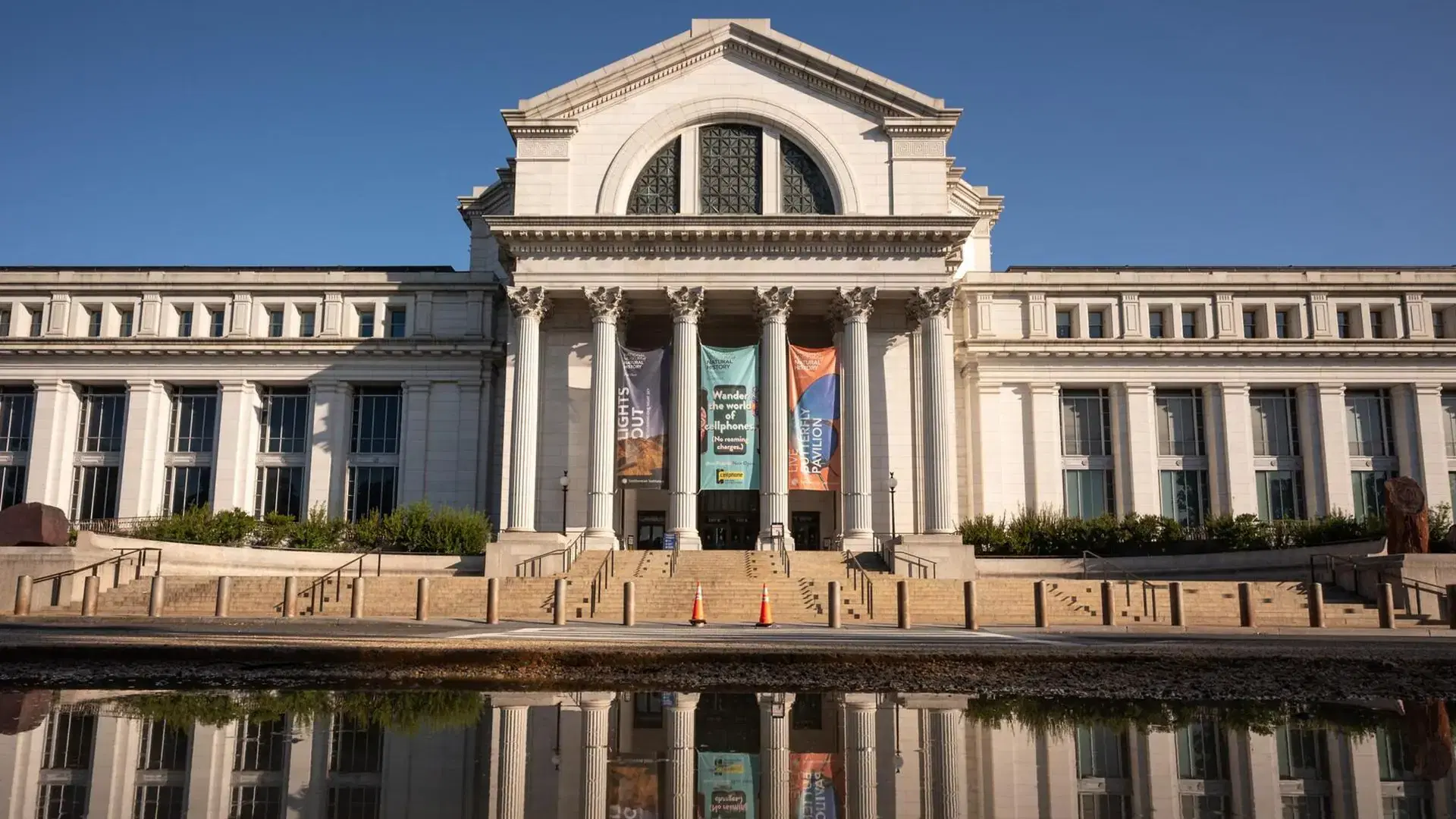
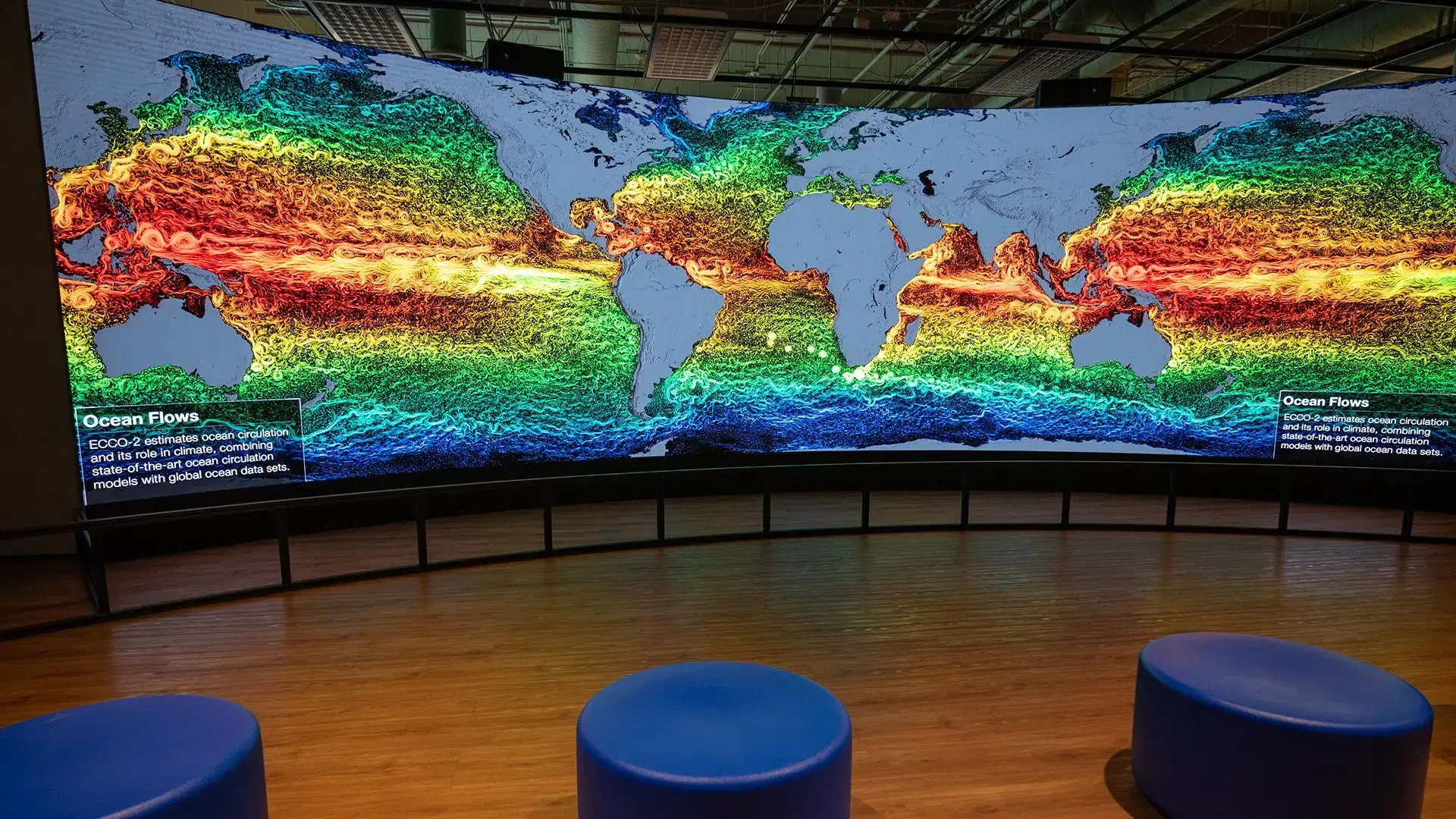
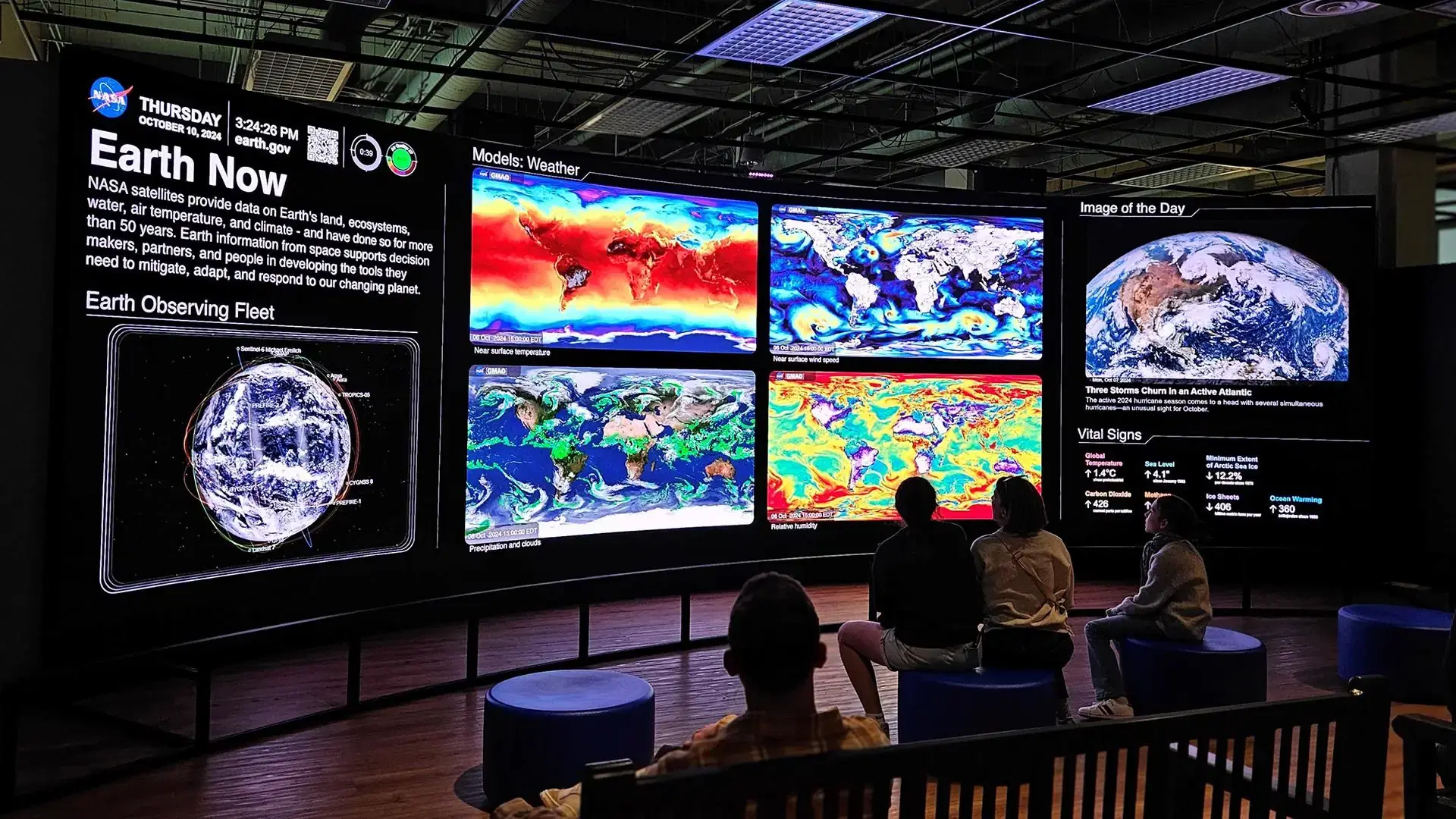
The Earth Information Center at the Smithsonian's National Museum of Natural History includes a large video Hyperwall displaying Earth science data visualizations and narrative stories, interpretive panels, and interactive audio/visual experiences showing how NASA and the Smithsonian study our home planet.
See More| Admission | Free |
|---|---|
| Hours | Every day (except Dec 25), 10am - 5:30pm |
| Address | Smithsonian National Museum of Natural History, 2nd Floor 1000 Madison Drive NW Washington, D.C. 20560 |
FEATURES
The Hyperwall features videos, dashboards with real-time data on Earth systems, along with an integrated view of our planet. The Earth Information Center collects information about Earth on a variety of scales ranging from ground-based data to space-based observations from all our inter-agency partners. Collecting information at each scale is important and, when combined, provides a comprehensive understanding of how the components of the atmosphere, land and ocean influence each other. With this understanding the datasets become more powerful tools for decision-making.
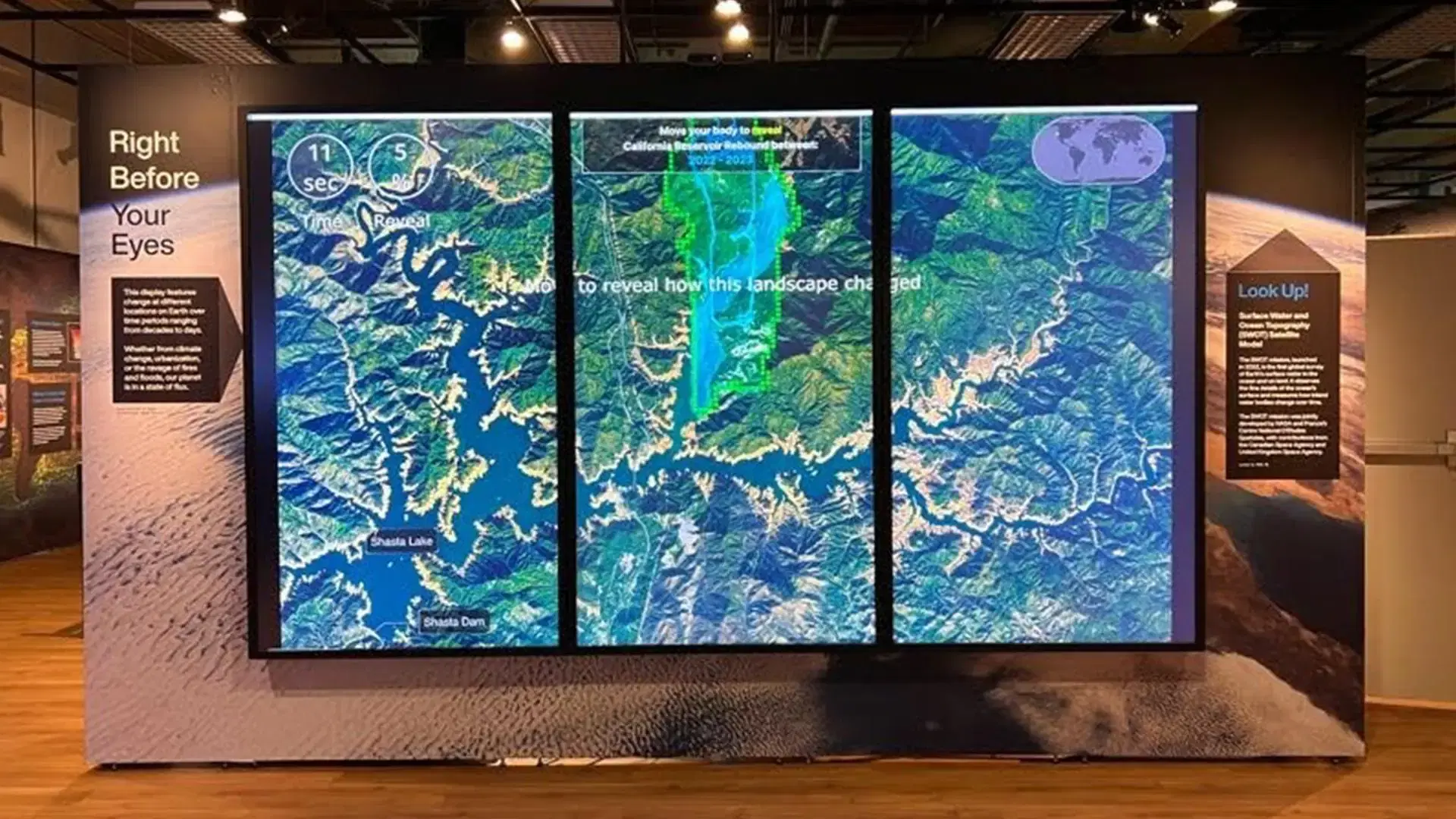
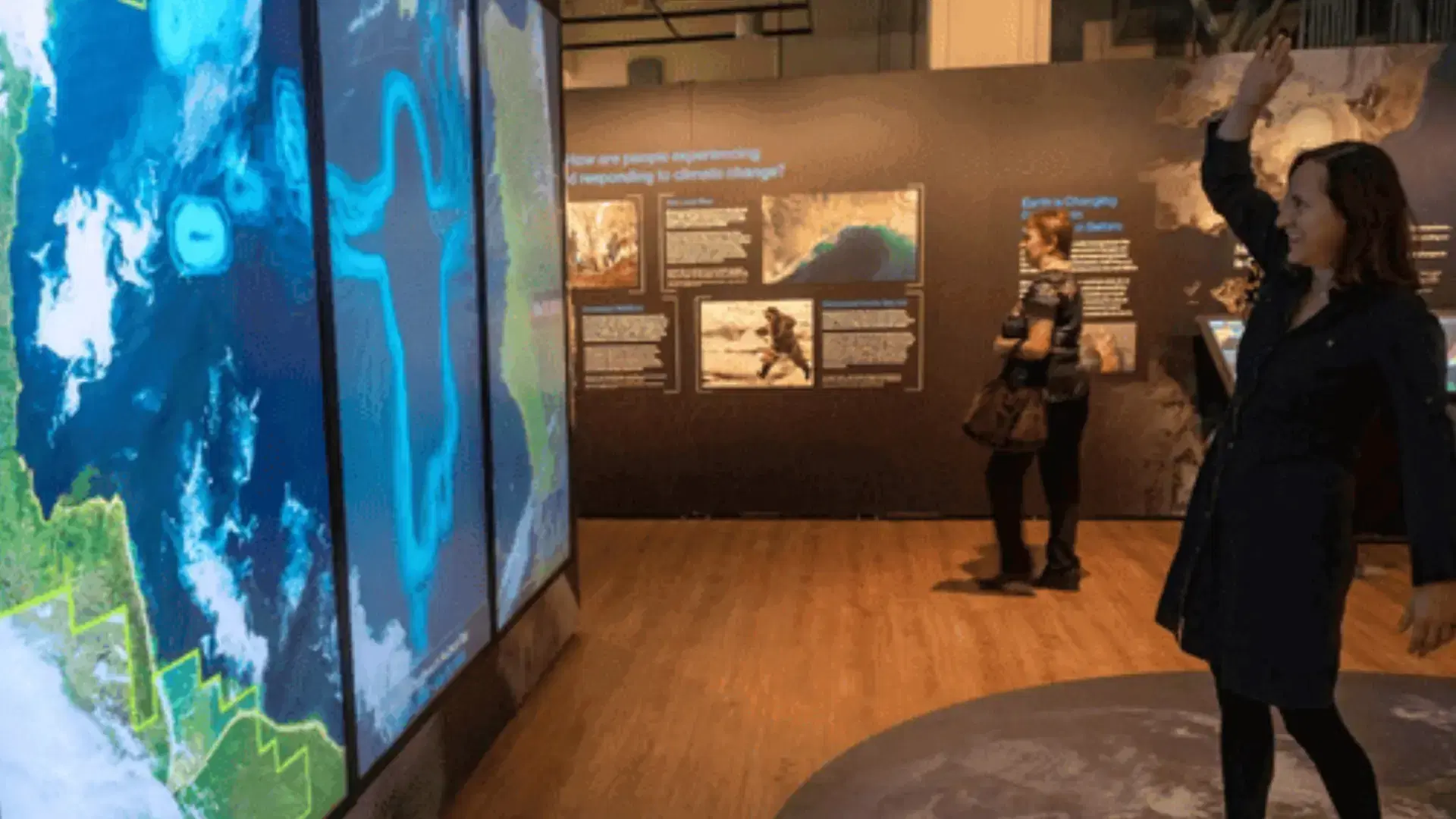
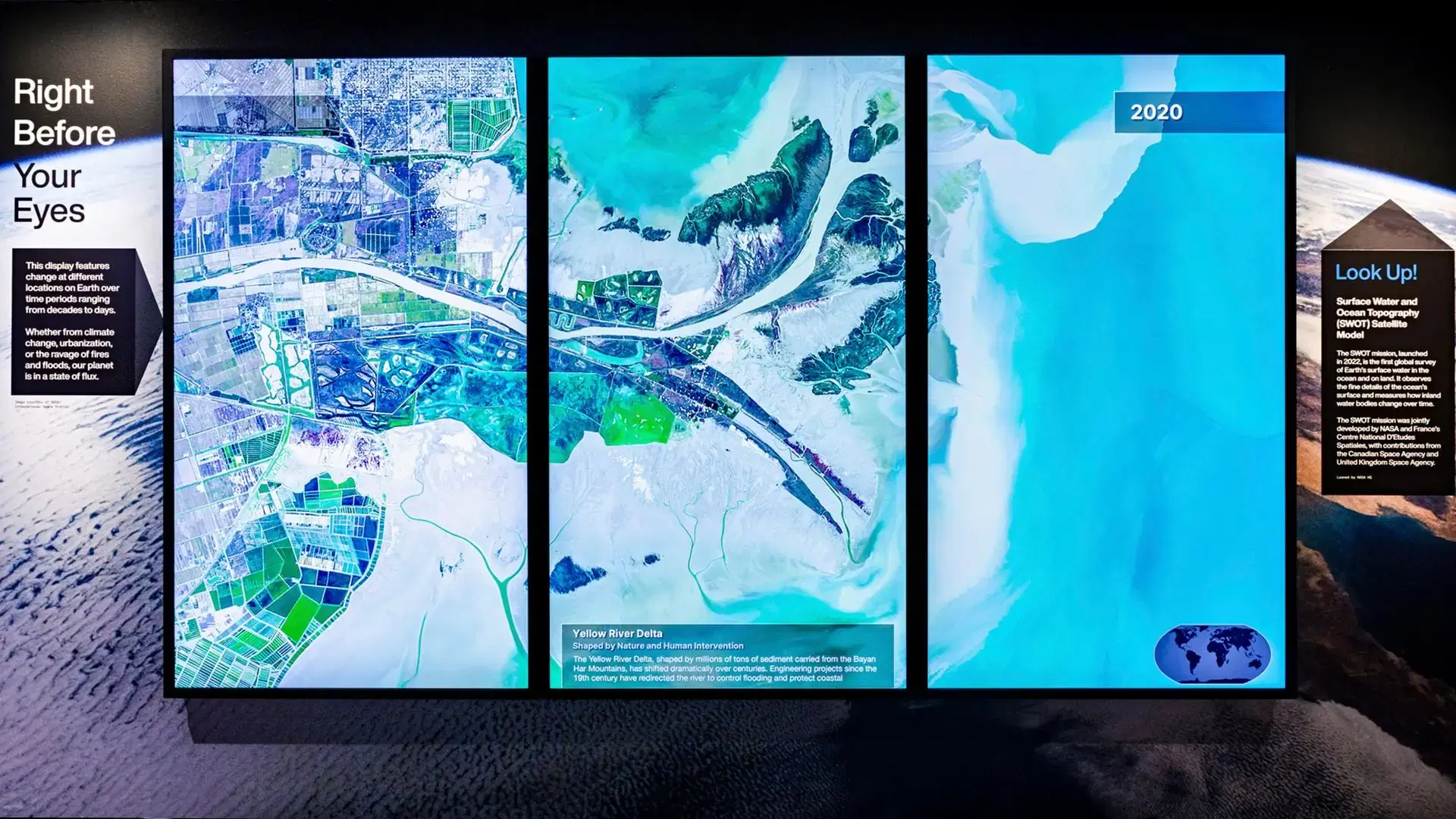
Spanning periods from days to decades, satellite imagery reveals changes in Earth's landscape over time. At the exhibit, visitors use their silhouette and movement to uncover images from before and after a range of events, including flooding, urbanization, fires, and more. This interactive experience demonstrates some of the human impact on our planet.
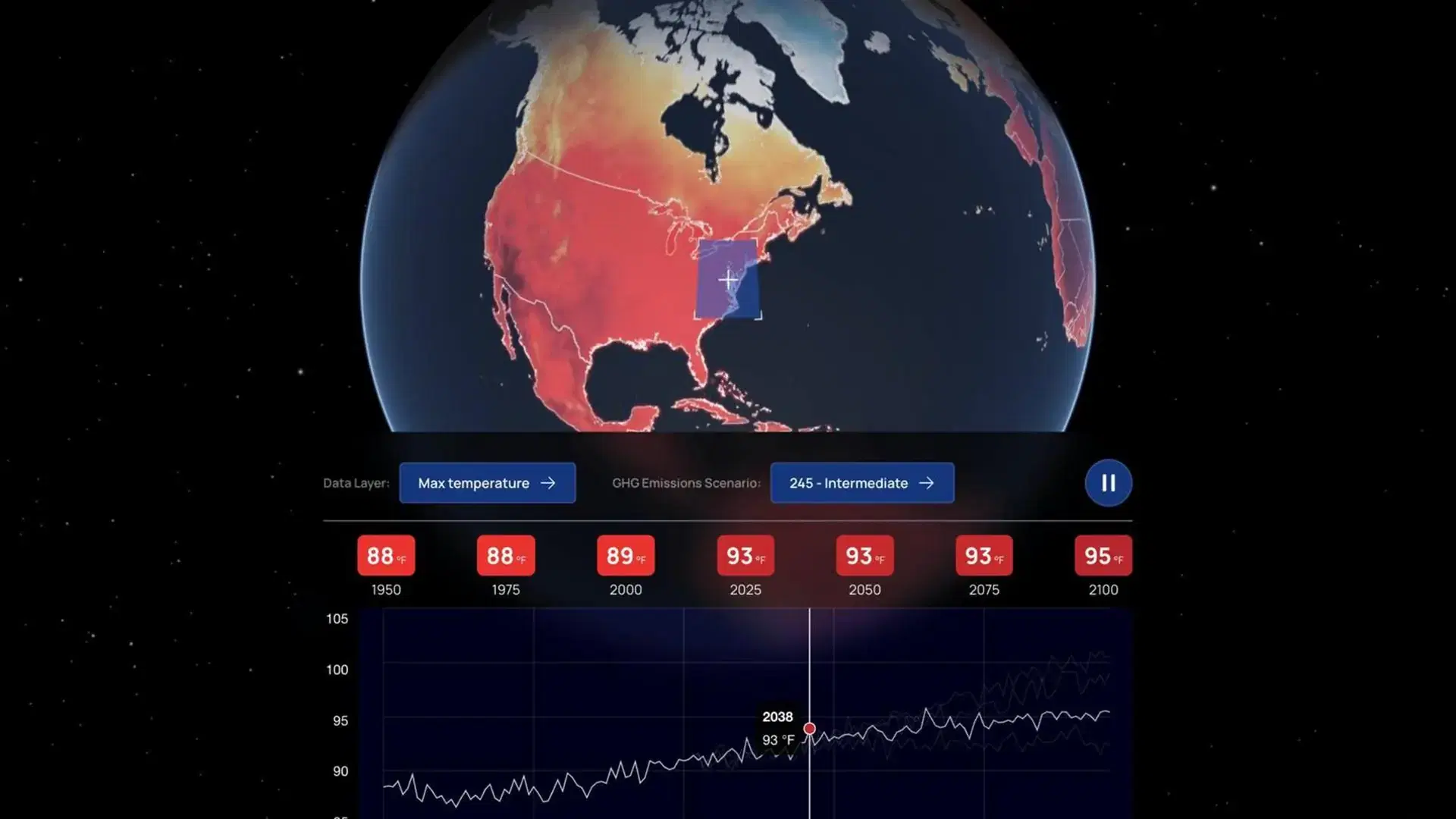
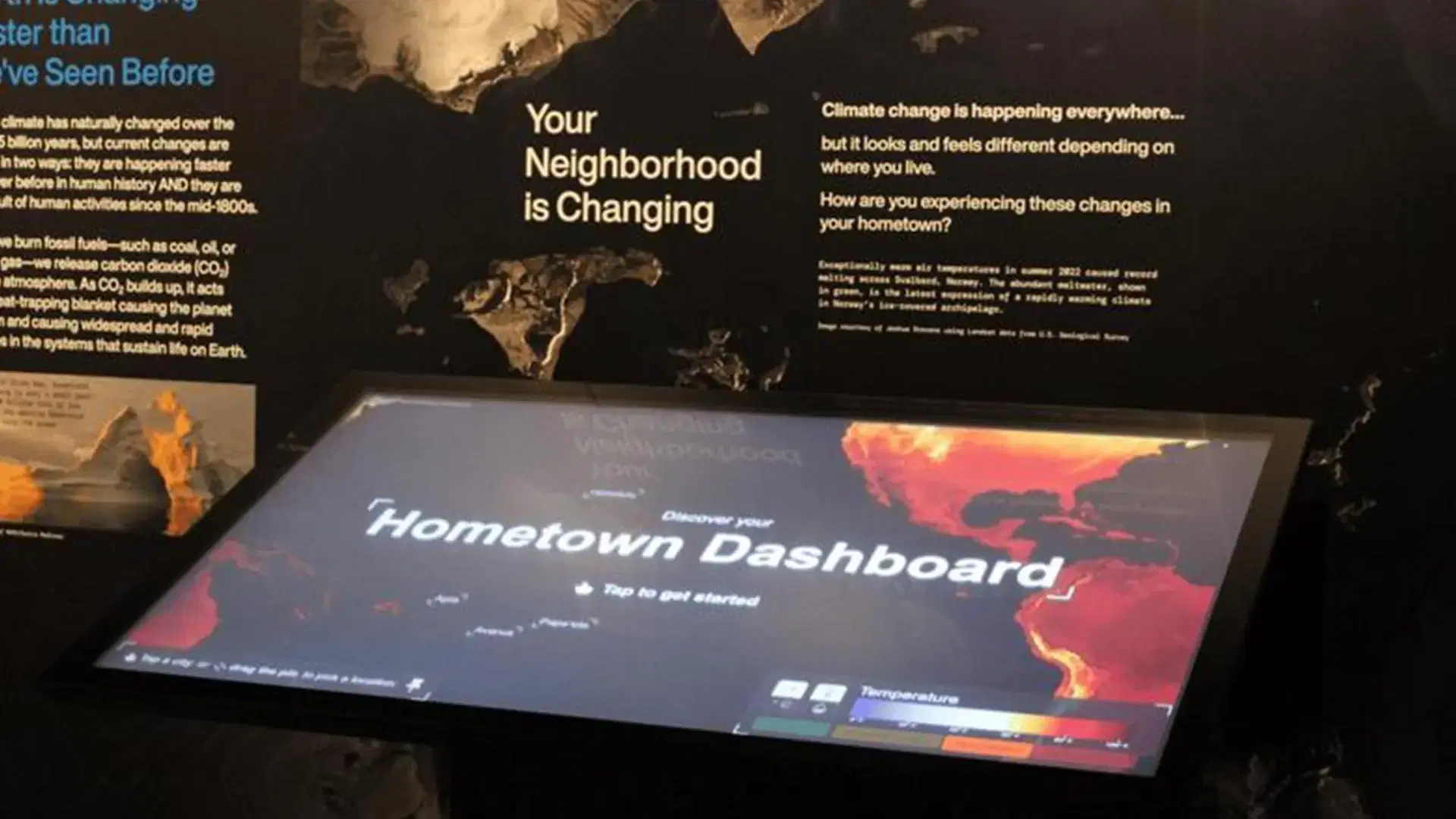
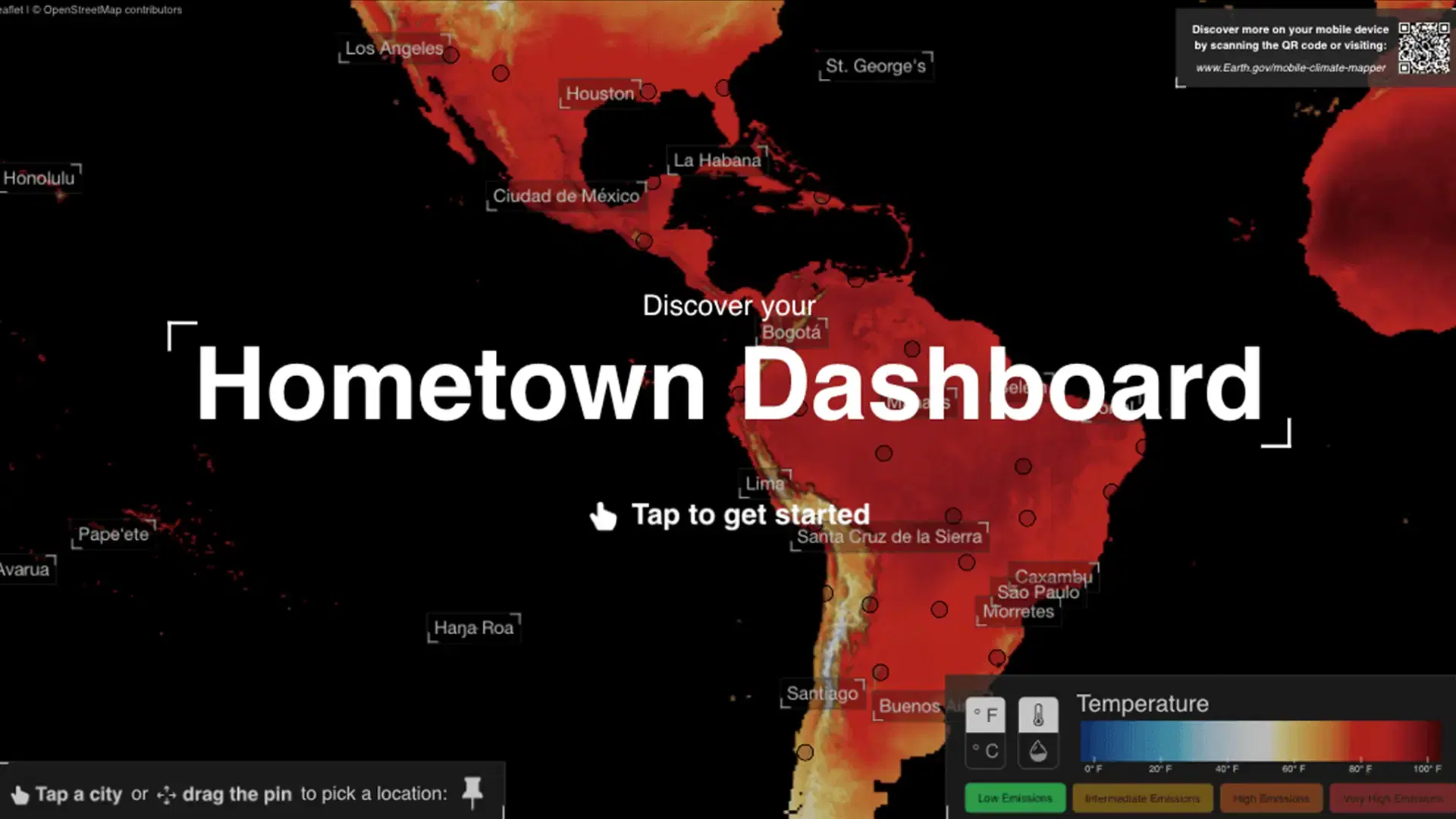
This interactive display allows users to learn how temperature and precipitation in their home region are projected to change from 1950 to 2100 under different scenarios. Visitors can select their hometown from a map, adjust time scales, and interact with visual charts that show historical and predicted changes.
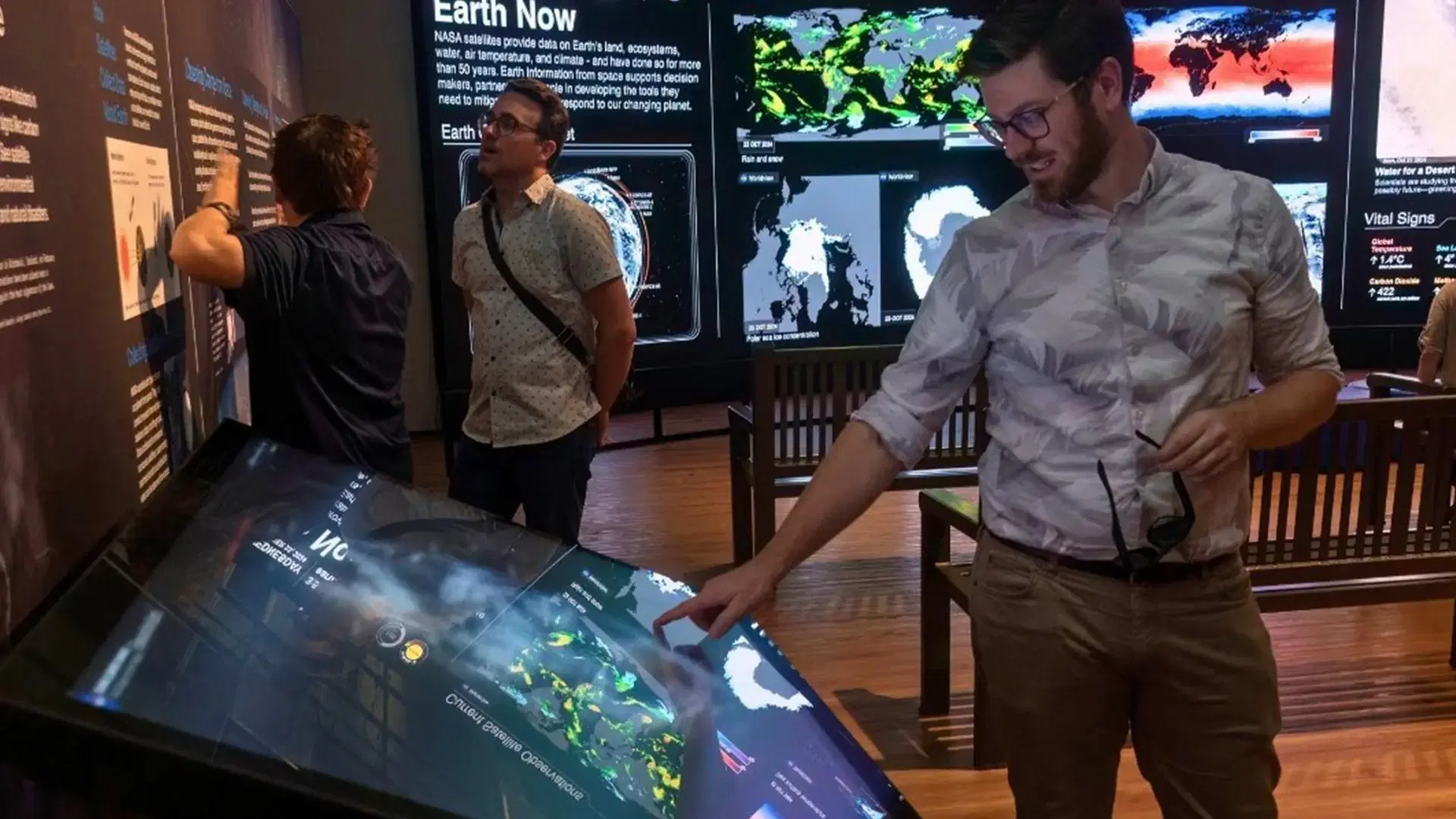
This interactive tool allows users to fly along with NASA's Earth observing missions in real-time, view satellite imagery of recent weather events, and monitor some of Earth's current measurements, including temperature, carbon dioxide, atmospheric ozone, and sea level. The kiosk has a touch screen for users to scroll to their location of interest, select a satellite to learn more about a mission, and interact with the 3D globe.
This interactive display allows users to learn how temperature and precipitation in their home region are projected to change from 1950 to 2100 under different scenarios. Visitors can select their hometown from a map, adjust time scales, and interact with visual charts that show historical and predicted changes.